
Tooth Extractions in Beverly Hills
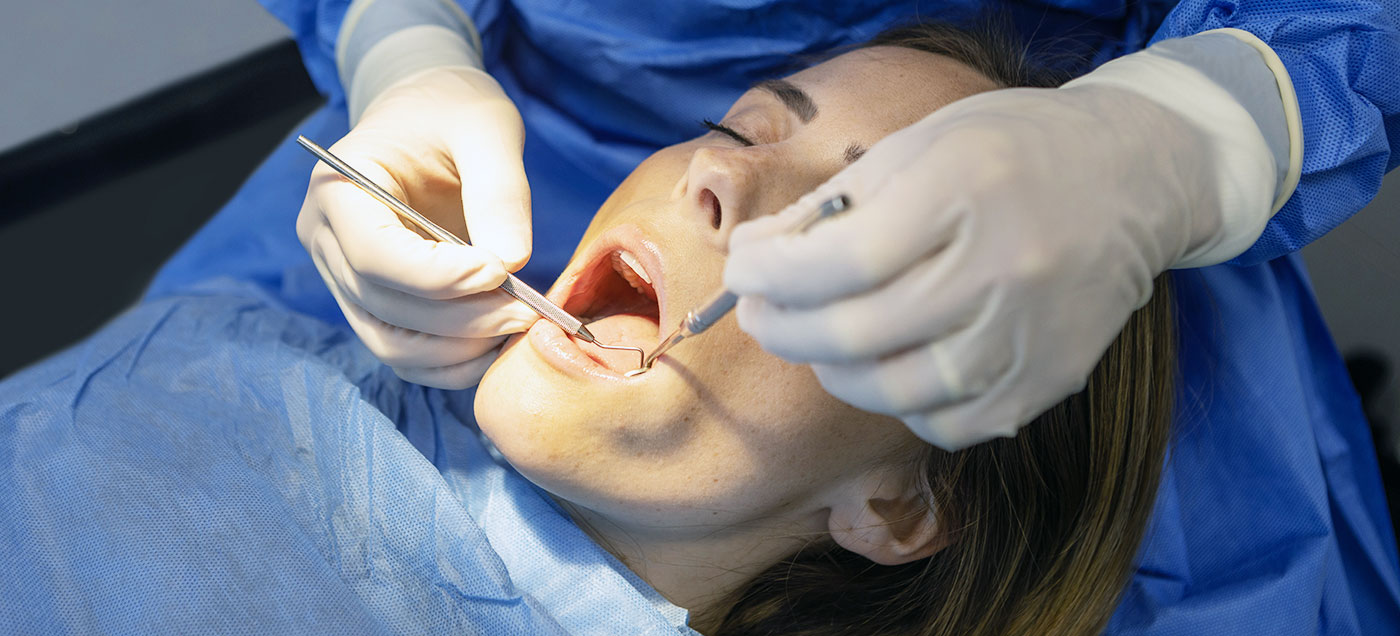
Careful Tooth Removal Focused on Protecting Your Natural Support
When a tooth cannot be saved comfortably or predictably, removing it may be the healthiest next step to prevent further damage to the surrounding teeth, bone, and gum tissue.
As a periodontist, Dr. Bradley Lander’s expertise is focused on removing a tooth as gently as possible while protecting and preserving the surrounding bone and gum tissues. Preserving these structures is essential to ensuring that any future replacement treatment is as simple, predictable, and successful as possible.
Many long-term complications do not arise from the loss of the tooth itself, but from how the tooth is removed.
Dr. Lander approaches every extraction as a reconstructive procedure, not simply a removal.
When A Tooth Extraction May Be Recommended
Although the priority is always to preserve natural teeth whenever possible, extraction may be recommended when a tooth cannot be predictably restored or maintained long term.
Common indications include:
- A fracture extending below the gum line or a non-restorable crack
- Deep decay or repeated infection compromising structural integrity
- Advanced periodontal disease with severe loss of supporting bone
- Failed previous dental treatment
- Teeth that cannot be predictably stabilized or restored
If you are unsure whether extraction is truly necessary, you are not alone. Many patients and referring dentists seek specialist evaluation when the decision is unclear.
Advanced diagnostic imaging and a focused clinical assessment allow our team to determine precisely what is treatable and what is not.
The Philosophy: Preserve What Nature Built
Modern tooth extraction is no longer simply about just removing a tooth. It is about preserving the surrounding environment.
This includes:
- Bone architecture
- Soft tissue contours
- Esthetics
- Structural stability
- Future restorative potential
Loss of these elements can affect both function and appearance and may make future reconstruction more complex.
Dr. Lander’s approach is based on cutting-edge atraumatic surgical principles designed to maintain the natural biological foundation of the jaw.
Advanced Diagnostic Planning
Before treatment, detailed evaluation may include:
- High resolution digital imaging
- Three-dimensional cone beam CT scanning
- Bone volume and density assessment
- Soft tissue architecture evaluation
- Future digital implant planning when appropriate
This allows treatment to be carefully planned before the tooth is removed.
Nothing is left to chance.
Gentle Tissue Preserving Extraction
Specialist extraction focuses on minimizing trauma to the surrounding structures.
Dr. Lander uses refined surgical techniques designed to protect the surrounding tissues, maintain the natural structure of the area, and gently remove any unhealthy or infected tissue. This helps create a clean, healthy foundation for smooth healing and long-term stability.
Socket Preservation and Bone Maintenance
After a tooth is removed, the body naturally begins reshaping the area as part of the healing process. Without support, the bone that once surrounded the tooth can gradually shrink and collapse, leading to soft tissue changes.
These natural changes can influence:
- The shape and support of the surrounding gums
- Facial structure in the area of the missing tooth
- Future dental implant placement
- The appearance of restorative or cosmetic treatment
To help maintain the natural structure of the area, Dr. Lander often recommends socket preservation at the time of extraction.
This involves placing regenerative material into the site to support the bone as it heals. The goal is to help the body maintain its natural architecture rather than allowing the area to collapse or change shape over time.
Healing and Recovery
Healing following atraumatic extraction is typically straightforward.
Most patients experience:
- Minimal postoperative discomfort
- Rapid soft tissue healing
- Stable bone remodeling
- Predictable recovery progression
Careful surgical technique helps minimize swelling and inflammation, while personalized postoperative guidance supports smooth and optimal healing.
Comfort and Patient Experience
Your comfort is central to the experience.
Treatment is performed under local anesthesia, with sedation available if desired. Many patients are pleasantly surprised by how comfortable the procedure feels.
Postoperative discomfort is typically minimal and easily managed with a personalized post-operative protocol. Most patients return to their normal activities quickly.
Planning What Comes Next
Removing a tooth is rarely the final step. It is part of a broader restorative plan designed to restore function, stability, and appearance.
Replacement options may include:
- Dental implants
- Implant or tooth supported bridges
- Full arch reconstruction
- Removable dentures
Careful planning allows the full treatment pathway to be understood before anything begins.
Why Specialist Tooth Extraction Matters
When extractions are performed without attention to structural preservation, patients may experience:
- Loss of bone support
- Gum recession
- Aesthetic changes
- More complex hard and soft tissue reconstruction
- Additional surgical procedures
Tooth removal is not the end of treatment. It is the beginning of what comes next. How the extraction is performed plays an important role in the simplicity, predictability, and long term success of future care.
Specialist care helps reduce these risks and supports more predictable long term outcomes.
Why Patients Choose Dr. Bradley Lander
Patients seeking advanced periodontal care often want more than routine treatment. They want careful planning, refined technique, and long term stability.
Dr. Lander provides:
- Specialist periodontal and implant care using modern, evidence based techniques
- Advanced imaging and precise diagnostic planning
- Minimally invasive surgical approaches designed to protect natural tissues
- Expertise in preserving bone and soft tissue architecture
- Integrated planning for both surgical and restorative outcomes
- Highly individualized treatment tailored to each patient
Each procedure is performed with careful attention to both immediate healing and long- term stability.
Our Locations
Beverly Hills Location
414 N Camden Dr # 1260,
Beverly Hills, CA 90210
P: (310) 859-8123
Santa Barbara Location
2173 Ortega Hill Rd,
Summerland, CA 93067
P: (805) 969-1736
Frequently Asked Questions
Will removing a tooth be painful?
Treatment is performed under local anesthesia, with sedation available if desired. Most patients are surprised by how comfortable the procedure feels. After treatment, any discomfort is typically mild and manageable with our personalized post-operative protocol.
How long does healing take after a tooth extraction?
Because healing is a gradual biological process, timing varies between individuals. Around three months after treatment, a three dimensional postoperative scan is often performed to evaluate healing and plan the next stage of care if needed.
What happens if I choose not to have a bone graft?
After a tooth is removed, the body naturally begins reshaping the area as part of the healing process. Without support, the bone that once surrounded the tooth can gradually reduce in height and width over time.
This may lead to a collapse in the soft tissue, and also result in less available bone for future implant placement. In some cases, more advanced reconstruction may be required later to rebuild the structure that has been lost.
Socket preservation helps maintain the natural foundation from the beginning, often making future treatment simpler and more predictable.
Can a dental implant be placed at the same time as the extraction?
In some situations, yes. Immediate implant placement may be possible when there is sufficient healthy bone and no active infection, as determined through careful clinical evaluation and imaging.
Although placing an implant right away can be desirable, it is not always the most beneficial approach. When conditions are not ideal, allowing the area to heal first often creates a more stable foundation and supports better long term success.
Our goal is not simply to replace a tooth quickly, but to provide a result that is reliable, durable, and built to last. Long term health and predictability always take priority over immediate placement.
Will removing a tooth change my appearance?
When bone and soft tissue are carefully preserved, visible changes are often minimal. Supporting the natural structure of the area helps maintain facial contours and gum architecture over time.
How soon can I return to normal activities?
Most patients return to their usual daily routine within a short period of time. Specific and personalized guidance is provided after treatment to support smooth healing and recovery.
What can I eat after the procedure?
A softer diet is typically recommended for the first few days while the area begins to heal. Normal eating can usually be resumed gradually as comfort allows.
Is sedation available if I feel anxious about treatment?
How do I know what replacement option is right for me?
Care begins with collaboration. Your goals, preferences, and priorities are an essential part of every decision. When appropriate, care is coordinated closely with your restorative dentist so that all available options are carefully considered together.
Each situation is unique. Treatment planning considers bone structure, long term stability, functional needs, and aesthetic goals. Options such as implants, bridges, or removable prosthetics are discussed in detail so you can make an informed decision with a clear understanding of what lies ahead.
Consultation
If you have been advised that a tooth may need to be removed, a specialist evaluation can clarify your options and help you make an informed decision.
Schedule a consultation with Dr. Bradley Lander in Beverly Hills.